Gujarat has long been recognised for experiences such as the White Rann, Gir National Park, Rani ki Vav and its remarkable textile traditions. While these continue to define the destination, they are only part of the story.
During our recent recce across the state, our team travelled through Ahmedabad, Patan, Muli, Dasada, Kutch, Dholavira, Gir, Palitana and Vadodara, revisiting established experiences, evaluating new developments and meeting the people who continue to shape Gujarat's cultural identity.
What stood out was not a single attraction, but how naturally heritage, wildlife, craftsmanship and community experiences come together to create journeys with remarkable depth. Conversations with museum curators, master weavers, artisan families, naturalists, and heritage hosts reinforced that Gujarat's greatest strength lies not only in its landmarks but in the people who continue to preserve its traditions.
These are the observations that continue to shape how we look at Gujarat today.
Where Every Gujarat Journey Should Begin
Ahmedabad remains the strongest introduction to the state. India's first UNESCO World Heritage City combines architecture, history, gastronomy, and living culture in a way that immediately sets the tone for the journey ahead.
Exploring the old city's pols, intricately carved wooden havelis, neighbourhood temples and bustling markets offers far greater insight than simply driving between monuments. The city's heritage is not preserved behind barriers; it continues to be part of everyday life.
House of MG continues to be one of Ahmedabad's strongest boutique heritage hotels, not only because of its architecture but because of the experiences it curates. Heritage walks through the old city, rickshaw tours, visits to stepwells and neighbourhood explorations all begin here, while dinner at Agashiye remains one of the finest introductions to authentic Gujarati cuisine. For guests wanting to experience Ahmedabad rather than simply visit it, few properties connect them to the city as effectively.
No visit to Ahmedabad is complete without the Calico Museum of Textiles, widely regarded as one of the world's finest textile museums. Advance reservations are essential, visitor numbers are intentionally restricted, and photography is not permitted, all of which reflect the museum's commitment to conservation.
What distinguishes the Calico Museum, however, is not only its collection but the people who bring it to life. The guided experience is led by experts who have spent decades interpreting India's textile heritage, transforming what could have been a museum visit into one of Gujarat's most enriching cultural experiences. For travellers with an interest in textiles, design, history or craftsmanship, it remains one of the defining experiences of the state.
A State Woven Through Generations
Textiles are woven into Gujarat's identity, but what makes the experience exceptional is the opportunity to meet the families who continue to practise these traditions.
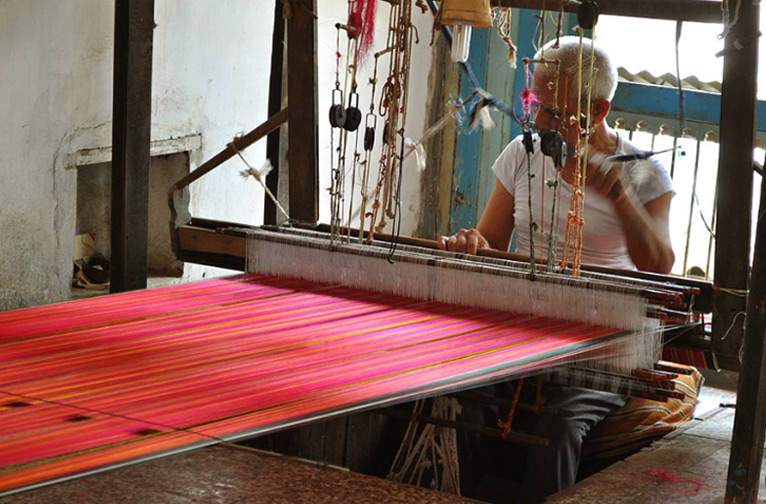
Patan remains synonymous with Patola, one of India's most celebrated weaving traditions. At the Patan Patola Heritage Centre, the Salvi family continues a craft that has been preserved across twenty-eight generations. Watching each silk thread being individually dyed before weaving begins offers a new appreciation for the extraordinary precision involved. Depending on the complexity of the design, a single Patola sari can take several months to complete, making every finished piece the result of remarkable patience and craftsmanship.
Further into the journey, Muli offers a complementary perspective. While Patan introduces the legacy of Patola, smaller weaving families in Muli spend more time explaining every stage of the process, creating a far more interactive experience for travellers interested in traditional textiles. The region is also known for Tangaliya weaving, a distinctive craft practised by the Dangasia community, adding another dimension to Gujarat's already rich textile landscape.
What became increasingly evident throughout the recce was that Gujarat's textile heritage is not confined to museums or galleries. It continues to thrive inside family workshops where knowledge is passed from one generation to the next. These conversations add context that no display or demonstration alone can provide.
From Ahmedabad to Patan and Muli, textiles became more than a craft. They became a thread connecting history, families, and communities across the state, setting the stage for what would become one of the most rewarding aspects of the journey through Gujarat.
Where Gujarat's Craft Traditions Come to Life
If Ahmedabad and Patan introduce Gujarat's textile heritage, Kutch demonstrates how deeply it remains part of everyday life.
Rather than being concentrated in a single town or museum, the region's craft traditions are spread across villages, each preserving a different skill, often within the same family for generations. Planning these visits carefully creates one of the strongest cultural circuits in India.
A good starting point is the Living and Learning Design Centre (LLDC) in Bhuj. More than a museum, it provides the context needed to understand the region's remarkable craft traditions before meeting the artisans themselves. Thoughtfully curated displays explain the history, techniques and cultural significance of textiles and handicrafts across Kutch, making it one of the most valuable introductions to the region. For travellers with a genuine interest in design and craftsmanship, it easily deserves a few unhurried hours.
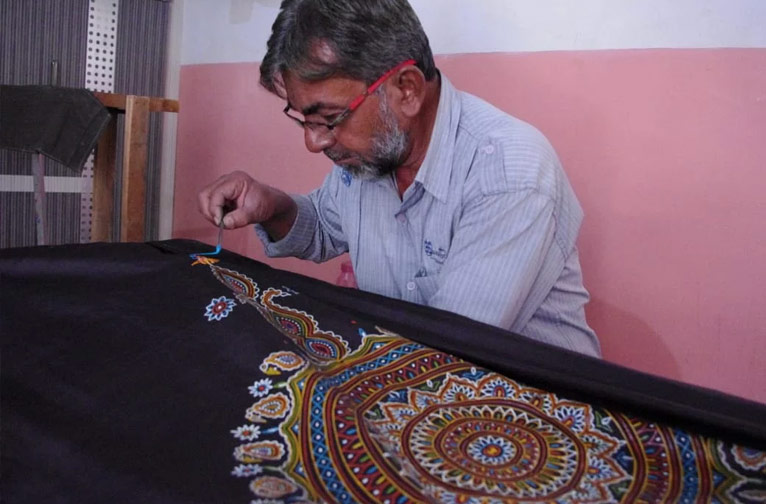
Just beyond LLDC lies Ajrakhpur, where the centuries-old tradition of Ajrakh block printing continues to evolve. The workshop established by the late Dr. Ismail Mohammad Khatri and now run by his family offers an excellent introduction to the philosophy behind Ajrakh rather than simply demonstrating the process. A short documentary, followed by time with the artisans, explains how natural dyes, hand-carved wooden blocks and generations of knowledge continue to shape one of India's oldest printing traditions. The experience feels informative rather than commercial, allowing visitors to appreciate the craft without the pressure of a retail demonstration.
A short drive away, Bhujodi offers another perspective on Kutch's textile landscape. The village remains home to Vankar weaving families who continue to produce handwoven shawls, blankets and sarees while also demonstrating traditional indigo dyeing techniques. Within the same village, visitors can meet one of the region's few remaining Mashru weavers. Once developed to combine the appearance of silk with the comfort of cotton, Mashru weaving requires exceptional skill and coordination, making it one of Gujarat's rarest surviving textile traditions. Watching the process firsthand offers an appreciation for a craft that is now practised by only a handful of artisans.
The journey continues to Nirona, one of the most rewarding artisan villages in Gujarat. What makes Nirona remarkable is the opportunity to experience three entirely different craft traditions in a single visit. Families continue to preserve the rare art of Rogan painting, a technique recognised internationally yet practised by only a handful of artisans. Nearby workshops demonstrate the making of handcrafted copper bells, where every bell is shaped and tuned by hand without welding, while neighbouring families continue the equally intricate tradition of lacquered woodwork.
What connects these villages is not simply the craftsmanship but the willingness of artisans to share their work, their family histories and the challenges of preserving traditions in a rapidly changing world. These conversations transform craft visits into cultural encounters, offering travellers a far deeper understanding of Gujarat than any gallery or showroom could provide.
The recce also highlighted another important observation. Time should never be rushed in Kutch. These villages work best when approached as opportunities for conversation rather than shopping. Allowing artisans the time to explain their techniques and stories consistently created the most meaningful experiences of the journey.
Not every destination in Gujarat leaves the same impression. While Mandvi remains a pleasant coastal stop, Kutch's craft villages deliver a far richer cultural experience and deserve additional time within the itinerary. They showcase the depth of Gujarat's living heritage and remain one of the state's strongest reasons to return.
Landscapes That Add Another Dimension
While Gujarat's craft traditions provide much of the cultural depth, its landscapes create an equally compelling contrast. Within a single itinerary, travellers can move from salt deserts and archaeological sites to grasslands and one of India's most celebrated wildlife reserves.
One of the state's most remarkable drives leads to Dholavira, a UNESCO World Heritage Site that was once one of the largest cities of the Indus Valley Civilisation. The approach itself is part of the experience. Crossing the Great Rann along the stretch popularly known as the Road to Heaven, the landscape changes dramatically, with vast salt flats extending to the horizon. The scenery varies with the season, rainfall and water levels, so expectations should be managed accordingly, but on the right day it becomes one of Gujarat's most memorable road journeys.
Dholavira rewards travellers who enjoy history and archaeology. Its sophisticated water management systems, urban planning and remarkably preserved stone structures offer an insight into a civilisation that flourished nearly 5,000 years ago. Visitor facilities remain limited, making preparation important, but for guests interested in ancient history, it is one of Gujarat's most significant cultural sites.
Two Wildlife Experiences, Two Very Different Stories
Gir National Park rightly remains Gujarat's best-known wildlife destination as the last natural home of the Asiatic Lion. For many travellers, it is the primary reason to visit the state, and the safari experience continues to be professionally managed and rewarding.
Equally interesting, however, is the Little Rann of Kutch, which offers a completely different perspective on Gujarat's natural heritage.
Instead of dense forests, the landscape is defined by salt pans, open grasslands and seasonal wetlands that support the Indian Wild Ass, wolves, flamingos and a remarkable variety of migratory birds during the winter months.
What distinguishes the Little Rann is the opportunity to understand the landscape through the communities that have adapted to it over generations. Encounters with the Agariya salt workers offer an insight into one of Gujarat's oldest occupations, while time spent with the Rabari community introduces visitors to a pastoral way of life that continues much as it has for centuries.
Among the community experiences evaluated during the recce, the village interactions around Dasada proved considerably stronger than those elsewhere in the state. Combined with wildlife safaris, they create a well-rounded experience that balances nature with culture.
Rather than choosing between Gir and the Little Rann, the two destinations complement one another exceptionally well, presenting two very different ecosystems and two equally rewarding stories.
The Stays That Strengthen the Journey
One of the most important observations from the recce was that the right accommodation often shapes the destination as much as the sightseeing itself.
House of MG remains one of Ahmedabad's strongest heritage stays, combining thoughtfully curated city experiences with authentic Gujarati hospitality.
In Dasada, Rann Riders continues to be the preferred base for exploring the Little Rann. Its location, experienced naturalists and well-curated village visits make it far more than simply a place to stay, and it deserves a minimum two-night programme.
For wildlife travellers, Aramness sets the benchmark in Gir. Excellent guiding, personalised service and carefully designed experiences, from birdwatching to village visits, make it one of India's finest luxury safari properties.
Closer to Palitana, Darbargarh Dared was one of the standout discoveries of the recce. With only a handful of rooms, exceptional hospitality and meaningful interactions with the surrounding community, it demonstrates how heritage hotels can become destinations in their own right rather than simply overnight stops.
Planning Gujarat Well
A well-planned Gujarat itinerary benefits from slowing the pace rather than increasing the number of destinations.
Advance reservations for the Calico Museum are essential due to limited visitor numbers, while time in artisan villages should be planned around conversations and demonstrations rather than shopping alone.
Some destinations also require careful expectation setting. Dholavira offers an extraordinary archaeological experience but limited visitor infrastructure. Poshina and Mandvi are better suited to niche interests than standard itineraries, while Gujarat's alcohol regulations should always be explained before arrival, with liquor permits arranged where required.
Perhaps the strongest conclusion from the recce was that Gujarat rewards travellers who look beyond individual attractions. Its appeal lies in how heritage cities, artisan villages, wildlife reserves, archaeological sites and carefully chosen stays connect to create a journey with remarkable variety.
It is this balance, supported by people who continue to preserve the state's traditions, that makes Gujarat one of India's most rewarding destinations for travellers seeking a deeper understanding of the country.