A Region That Has Evolved Beyond Wildlife
Central India has long been recognised for its tiger reserves. Kanha, Pench, Satpura, Panna and Tadoba have earned international recognition for exceptional wildlife sightings and remain some of India's most important conservation landscapes.
Our recent journey through the region set out to evaluate these destinations with a broader objective. Beyond safari experiences, we wanted to understand how conservation, community initiatives, hospitality and new experiences have strengthened Central India's appeal for today's luxury traveller.
One theme emerged consistently across every reserve. Wildlife remains the starting point, but it is no longer the complete story.
In Kanha, the remarkable recovery of the hard-ground barasingha remains one of India's greatest conservation achievements. Once on the brink of extinction, the species has become a global example of what sustained conservation efforts can accomplish. Time spent with naturalists reinforced that the success of Kanha extends far beyond tiger sightings. The reserve continues to demonstrate how scientific management, habitat restoration and long-term commitment have shaped one of India's healthiest ecosystems.
A similar story unfolded in Panna. Once facing the complete loss of its tiger population, the reserve has become one of India's most successful wildlife restoration projects. Today, visitors experience a thriving landscape that reflects years of careful conservation planning rather than chance. It is an important reminder that the future of wildlife tourism depends as much on long-term ecological management as it does on iconic species.
Each reserve offered its own character. Satpura rewards travellers looking for slower, more immersive experiences through walking safaris, canoeing and boat safaris that reveal a different perspective on the forest. Pench balances exceptional wildlife with outstanding guiding, while Tadoba continues to attract experienced wildlife enthusiasts seeking consistently rewarding sightings alongside increasingly refined luxury accommodation.
Collectively, these destinations demonstrate how Central India has evolved. Rather than functioning as individual wildlife parks, they now form a region where conservation, biodiversity and carefully designed experiences work together to create journeys of remarkable depth.
The People Behind the Landscape
The forests may define Central India's identity, but the people working around them are increasingly shaping the experience.
Throughout the journey, conversations with naturalists, conservationists, lodge teams and local communities revealed a shared understanding that successful wildlife tourism depends on far more than safari drives.
In Satara Village, located near Kanha, community tourism has created new opportunities while allowing visitors to experience rural life beyond the boundaries of the national park. Rather than presenting village life as a performance, experiences remain rooted in everyday activities, creating genuine interactions that complement time spent in the forest.
A different perspective emerged through PashooPakshee, where traditional Gond art has become a platform for both cultural preservation and sustainable livelihoods. Meeting the women behind the initiative demonstrated how creative enterprises can generate long-term opportunities while protecting artistic traditions unique to the region.
Across the reserves, another pattern became clear. The quality of guiding continues to be one of Central India's greatest strengths. Experienced naturalists consistently encouraged guests to look beyond the search for tigers, drawing attention to birdlife, insect behaviour, tree species, seasonal changes and the intricate relationships that sustain the forest ecosystem. This broader interpretation transforms each safari into a richer wildlife experience.
Hospitality has evolved alongside conservation. Properties are no longer defined solely by their location near a national park but by the experiences they curate. Walking with expert naturalists, spending time with neighbouring communities, participating in conservation initiatives and exploring lesser-known buffer zones all contribute to a more complete understanding of the destination.
One of the strongest observations from the journey was that the most memorable moments often happened away from the safari vehicle. They came while listening to conservation stories, meeting local artisans, walking through neighbouring villages or understanding the work taking place beyond the boundaries of the protected forests.
These experiences do not replace wildlife. They give it context.
The Experiences That Are Redefining Central India
One of the strongest observations from our visit was that the wildlife experience no longer begins when the safari vehicle enters the forest. Increasingly, it starts with the lodge, the naturalists and the experiences that introduce guests to the destination before the first game drive.
Across every reserve, interpretation has become one of Central India's greatest strengths. The most experienced naturalists consistently encouraged us to look beyond tiger sightings, drawing attention to alarm calls, birdlife, insect behaviour, tree species and the subtle signs that reveal what is happening inside the forest. That depth of knowledge transforms every safari, regardless of the wildlife encountered.
The lodges have evolved alongside this shift.
In Tadoba, Svasara Jungle Lodge continues to stand out through its experienced naturalist team and long-standing relationship with the reserve, while Bamboo Forest Safari Lodge remains one of the destination's strongest all-round properties, combining excellent guiding with a wide range of guest experiences. Waghoba Eco Lodge impressed with its contemporary boutique approach and conservation-led philosophy, while Trees N Tigers offers an intimate luxury tented experience that adds another excellent option for travellers seeking a smaller property. Together, these lodges demonstrate how much the destination has matured beyond simply offering accommodation close to the park.
Pench reinforced a different lesson. Here, lodge location can significantly influence the overall experience. Properties close to Karmajhiri Gate, such as Jamtara Wilderness Camp and Pench Tree Lodge, reduce transfer times and allow guests to spend more time in the forest. Both continue to set high standards for guiding and personalised wildlife experiences, while Pench Jungle Camp remains a reliable choice with consistently strong operations and excellent food. Matching accommodation with the correct safari gate is a small planning detail that has a noticeable impact on the overall guest experience.
Kanha arguably offers the widest range of exceptional safari lodges in Central India. Banjaar Tola continues to define understated luxury on the banks of the Banjar River, while Kanha Earth Lodge stands apart through its sustainability-led philosophy and close engagement with neighbouring communities. Singinawa Jungle Lodge offers one of the region's most distinctive narratives through its Museum of Life and Art and its long-standing work with Gond and Baiga artisans. Among the newer additions, Outpost 12 impressed with its riverside setting, contemporary design and meaningful interactions with nearby Gond villages, reflecting how the region continues to evolve.
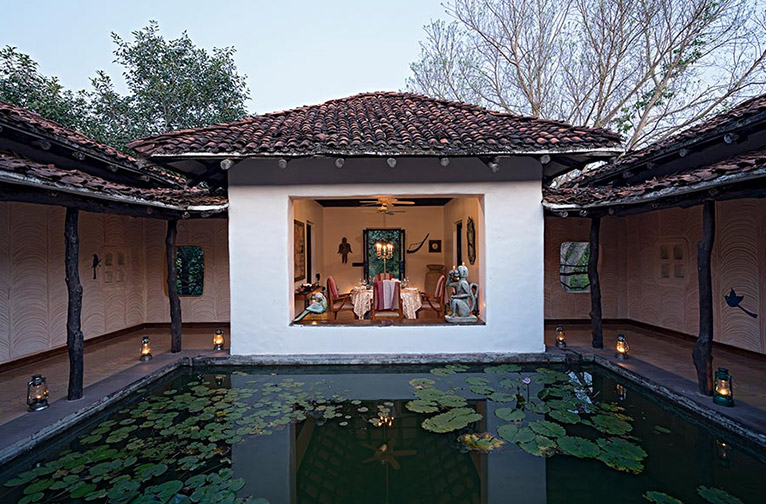
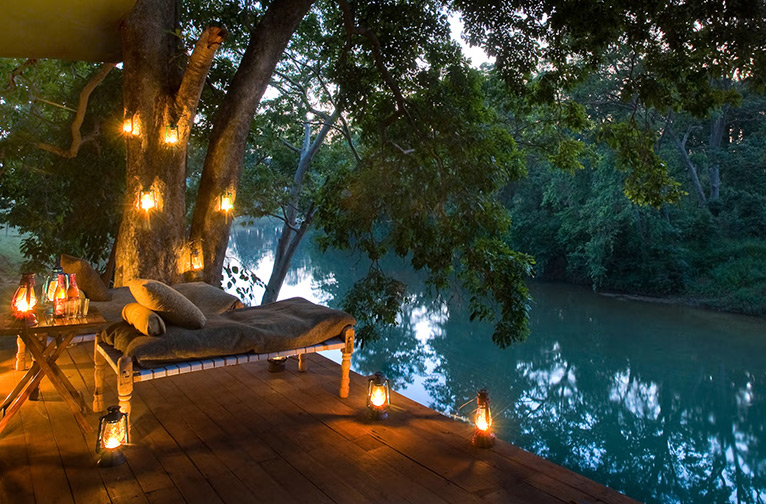
In Bandhavgarh, the diversity of accommodation reflects the diversity of the reserve itself. Samode Safari Lodge continues to set the benchmark for personalised guiding and immersive safari experiences. Kings Lodge combines sustainability with consistently high guiding standards, while Tree House Hideaway remains one of the destination's most distinctive stays, offering an experience that feels deeply connected to the surrounding forest. The arrival of The Oberoi Vindhyavilas Wildlife Resort adds another dimension to the destination, bringing international luxury while maintaining a strong connection to the wildlife experience.
Further along the circuit, Panna continues to surprise. Pashan Garh remains the benchmark for luxury wildlife experiences, combining exceptional guiding with village visits and nature-based activities beyond safari drives. Sarai at Toria offers a more intimate riverside alternative, while the newly opened Rajgarh Palace introduces heritage into the circuit, creating a seamless transition from wilderness to the cultural finale at Khajuraho.
Throughout the journey, one observation remained consistent. The finest lodges are no longer defined simply by their rooms or facilities. They are distinguished by the people who shape the experience, the knowledge they share and the connections they create between guests and the destination.
Field Notes from Central India
Every destination recce leaves behind practical observations that influence how we plan future journeys. These were some of the most valuable takeaways from travelling across Central India's wildlife circuit.
Treat every reserve as a different experience. While Kanha, Pench, Tadoba, Bandhavgarh and Panna are often grouped together, each reserve offers its own landscape, pace and style of wildlife viewing. Combining them creates a far richer journey than repeating multiple safaris within a single park.
Buffer zones deserve equal consideration. In Tadoba, several buffer zones now offer wildlife experiences comparable to the core areas while providing quieter forests and different landscapes. Including both core and buffer safaris creates a more balanced itinerary and avoids repeating similar routes.
Match the lodge to the safari gate. In Pench particularly, selecting accommodation close to the appropriate entry gate reduces unnecessary road transfers and allows guests to maximise their time inside the reserve. It is a simple operational decision that significantly improves the overall experience.
Include experiences beyond the safari. Community initiatives such as Satara Village near Tadoba and PashooPakshee in Kanha demonstrate how wildlife tourism is creating opportunities beyond the forests. These experiences add valuable context to the destination and consistently resonated with our team throughout the journey.
End the circuit with Khajuraho. After several days in the forests, the temples of Khajuraho provide a natural conclusion to the journey. Located less than an hour from Panna, they offer a seamless transition from wildlife to culture before departure, reinforcing that Central India is far more than a safari destination.
Looking at Central India Differently
Before this journey, Central India was often defined by its tiger reserves.
Today, it is defined by much more.
Exceptional guiding, conservation success stories, thoughtfully managed lodges, meaningful community initiatives and carefully curated experiences have transformed the region into one of India's most complete wildlife circuits.
Perhaps the greatest change is that every reserve now contributes something unique. Tadoba's evolving safari landscape, Pench's exceptional guiding, Kanha's conservation legacy, Bandhavgarh's remarkable diversity and Panna's inspiring recovery come together to create a journey that is greater than the sum of its individual parks.
That is what our team returned with.
Not simply a list of recommended lodges or safari routes, but a clearer understanding of how Central India continues to evolve and why it remains one of the country's most rewarding wildlife journeys.