Every State Tells a Different Story
The North East is often introduced through its mountains, forests and rivers. They are certainly remarkable, but travelling across Assam, Meghalaya, Nagaland and Arunachal Pradesh quickly revealed that the region cannot be understood through its landscapes alone.
Every state brought a different perspective. Every community introduced traditions that shape everyday life. By the end of the journey, it became clear that the North East is not one destination but a collection of distinct identities, each deserving time and curiosity.
The journey began to take shape in Majuli, the world's largest inhabited river island. Reaching it begins with a ferry across the Brahmaputra, a crossing that naturally slows the pace of the journey before the island even comes into view. Majuli is often recognised for its geography, yet its real significance lies in the satras that preserve Assam's Vaishnavite traditions through music, dance, theatre and philosophy. These are not museums preserving the past. They remain active institutions where culture continues to evolve while staying rooted in centuries-old practices.
Another important stop on the island was the Mask Making Centre, where families produce masks from bamboo, clay and natural fibres for devotional performances inspired by the Ramayana and the Mahabharata. Watching the process reinforced how closely craftsmanship remains connected to cultural practice. These masks are created to be used, not simply displayed, ensuring the tradition through performance as much as through preservation.
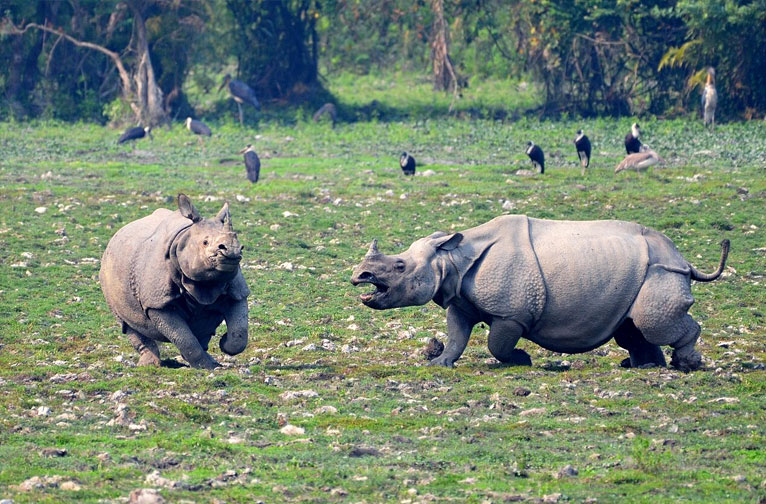
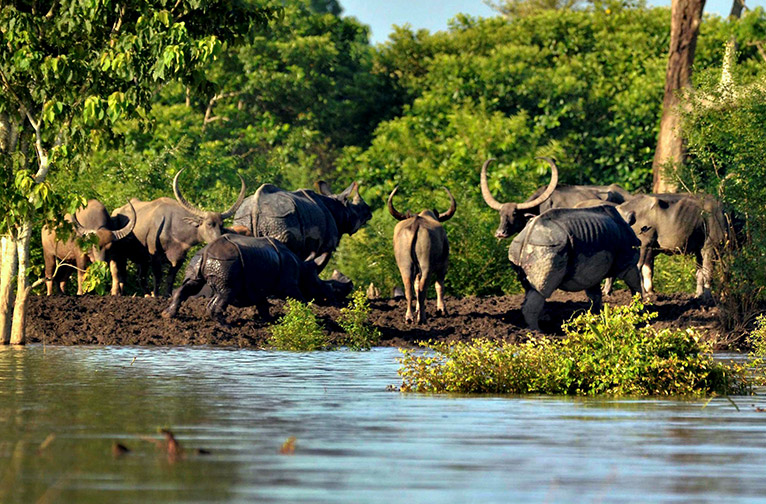
In Kaziranga National Park, the focus naturally falls on the one-horned rhinoceros, but the recce reinforced that the park's appeal extends far beyond a single species. Conversations with lodge teams and naturalists consistently highlighted the importance of the Brahmaputra's annual floods, which replenish the grasslands and wetlands that sustain the park's extraordinary biodiversity. Elephants, wild buffalo, swamp deer and hundreds of bird species all thrive because of this constantly changing landscape. Looking beyond the rhino transforms Kaziranga from a wildlife checklist into one of India's most dynamic ecosystems.
By the time we reached Nagaland, another assumption had already been challenged. It is easy to speak about "Naga culture" as though it were one identity, yet every tribe has its own language, customs, festivals and history. That diversity became one of the defining observations of the journey. Every border introduced a different story rather than simply another destination.
Traditions That Shape Everyday Life
A recurring observation throughout the journey was that traditions across the North East are not preserved for visitors. They continue because they remain central to everyday life.
In Khonoma, often recognised as India's first green village, conservation is not presented as a tourism initiative. It is part of the community's way of life. Walking through the village with local guides revealed how farming, forest management and community decision-making have worked together for generations. Even today, visitors encounter a village where heritage and sustainability exist naturally alongside one another rather than being interpreted through a visitor centre.
Further north, Longwa is frequently introduced through a single fact: the village chief's house sits across the India–Myanmar border. It is certainly unusual to stand in two countries at once, but the conversations that followed proved far more memorable than the geography itself. Members of the Konyak community spoke openly about preserving traditions while embracing change, offering a perspective that extended well beyond the village's famous border. During our visit, preparations for the Aoleang Festival were already underway, bringing families together to celebrate the Konyak New Year through music, dance and community gatherings. Experiencing these preparations revealed a celebration rooted in community rather than performance.
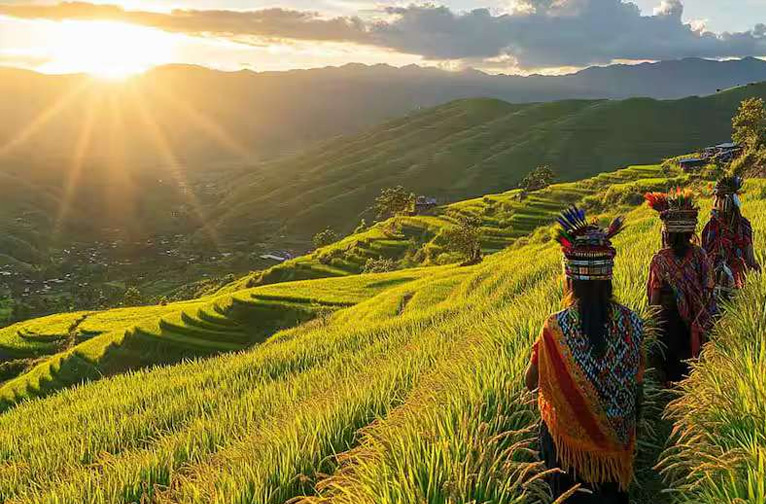
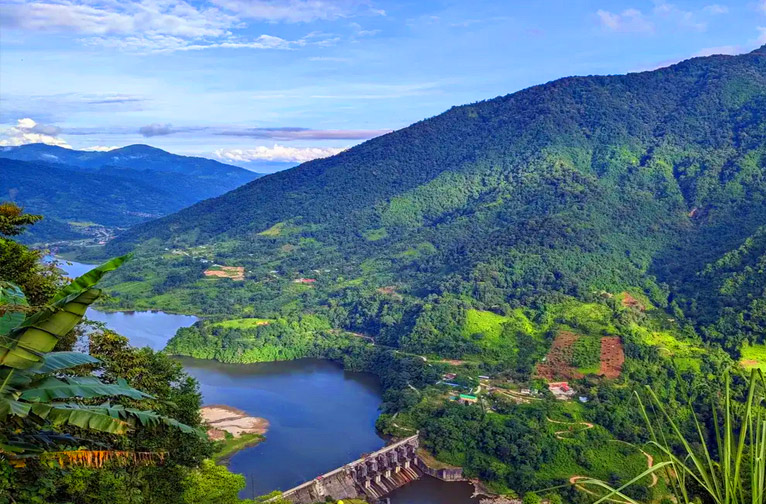
Arunachal Pradesh offered another perspective through the Mopin Festival, where the Galo community celebrates prosperity and the arrival of spring. While the dances and ceremonies immediately capture attention, equally memorable were the visits to Kabu Village, where bamboo defines everyday life. Homes, fencing and household objects are still built using traditional techniques, while sharing locally brewed rice wine with residents offered an opportunity to understand daily life beyond the festival itself.
Further east in Ziro Valley, the Apatani community continues one of India's most remarkable examples of sustainable agriculture. Rice and fish are cultivated together through a system refined over centuries without relying on artificial irrigation. Walking through Hija Lima and neighbouring villages revealed that these practices remain very much alive, supported by a community that continues to adapt while protecting its cultural identity. Traditional dance performances, bamboo gardens and everyday village life all reinforce that Ziro is far more than a scenic valley.
Across every state, one observation remained remarkably consistent. The most memorable experiences were rarely planned around a major attraction. They happened while walking through a village, sitting down for a meal, watching an artisan at work or listening to someone explain why a tradition continues to matter today.
That is perhaps the greatest strength of the North East. Its landscapes may first capture attention, but it is the people who give those landscapes their meaning.
Landscapes That Shape the Journey
One of the strongest observations from the journey was how dramatically the landscape changed from one state to the next. Within a matter of hours, the route shifted from tea estates and river islands to limestone caves, mountain villages and dense forests. More importantly, every landscape explained something about the communities that lived within it.
In Meghalaya, nature has never been something to overcome. It has shaped the way communities have adapted for generations. The Living Root Bridges are perhaps the best example. Rather than building bridges from timber or stone, Khasi communities patiently guide the aerial roots of rubber trees across streams until they become strong enough to support people. The process takes decades, sometimes longer than a single lifetime, making the bridges a remarkable example of planning for future generations rather than immediate needs.
Reaching them is part of the experience. The descent to the Single Living Root Bridge involves nearly 2,000 steps, followed by another 1,500 steps to the Double Decker Bridge. It is physically demanding, with uneven terrain and basic facilities along the route, making realistic expectation setting an important part of itinerary planning. Local guides are mandatory and add valuable context to both the trek and the surrounding Khasi villages.
The journey through Meghalaya reveal the same relationship between people and landscape. The limestone formations of Mawsmai Cave, the quieter trails through the Garden of Caves, and viewpoints overlooking Nohkalikai Falls each demonstrate a destination where nature remains central to everyday life rather than simply forming the backdrop to it.
In Assam, the Brahmaputra plays a similar role. The river has shaped Majuli, sustained Kaziranga and influenced life across the state for centuries. Its annual floods are often viewed as a challenge, yet they are equally responsible for replenishing the grasslands and wetlands that make Kaziranga one of India's richest wildlife habitats. Understanding this natural cycle offers a far deeper appreciation of the destination than simply focusing on wildlife sightings.
Further east, the tea estates around Dibrugarh provide another perspective on Assam. Staying within a working tea estate offers more than scenic surroundings. Estate walks, nearby village visits and rainforest excursions create a broader understanding of Upper Assam's history, landscape and way of life, reminding visitors that tea is only one chapter in the region's story.
As journeys across the North East become more immersive, accommodation is evolving alongside the destination. Carefully restored tea bungalows, intimate wildlife lodges and thoughtfully managed homestays are no longer simply places to stay; they have become an integral part of the experience, connecting guests more closely with the landscapes and communities around them.
Field Notes
Every recce leaves behind observations that help shape stronger journeys. These were some of the insights that stood out while travelling across Assam, Meghalaya, Nagaland and Arunachal Pradesh.
Allow time for each state to be experienced on its own terms. The North East should never be approached as a single destination. Every state introduces a different landscape, culture and pace, and trying to combine too much into one itinerary often means missing what makes each place distinctive.
Majuli deserves more than a brief stop. Beyond being the world's largest inhabited river island, it is one of Assam's most important cultural centres. Time spent at the satras and the island's mask-making workshops provides a far richer understanding of Majuli than simply crossing it on the way to another destination.
Kaziranga rewards travellers who look beyond the safari. Exploring different safari zones, spending time with experienced naturalists and including activities such as village visits or biodiversity experiences offers a much more complete understanding of the region.
Accommodation is becoming one of the North East's greatest strengths. The region no longer asks travellers to compromise on comfort in order to experience remote destinations. In Kaziranga, Diphlu River Lodge remains one of the finest wildlife lodges in the region, while the Taj Kaziranga Resort & Spa has introduced a new benchmark for luxury in Assam. Mancotta Heritage Chang Bungalow offers a distinctive tea estate experience in Upper Assam, and in Arunachal Pradesh, Reyi Homestay reminded us that genuine hospitality and local connections often leave the strongest impression. Across the journey, the best stays reflected the character of their surroundings rather than simply offering luxury.
Plan around the region's festivals whenever possible. Celebrations such as Aoleang, Mopin, Dree and the Hornbill Festival provide valuable insight into local traditions and community life. At the same time, practical considerations such as ferry schedules to Majuli, road conditions and the physical demands of the Living Root Bridge trek should always be factored into itinerary planning.
Looking at the North East Differently
The North East rarely reveals itself through a single experience.
It is found in a conversation with a village elder, the patience behind a Living Root Bridge, the quiet rhythm of life on Majuli, the changing landscape of Kaziranga or the traditions that continue to shape communities across Nagaland and Arunachal Pradesh.
Over the course of this journey, every state challenged a different assumption. Together, they reinforced one simple observation: the North East is not a destination to be rushed or generalised.
Its greatest strength lies in its diversity.
And that is why North East India is the most rewarding region to explore in India
.