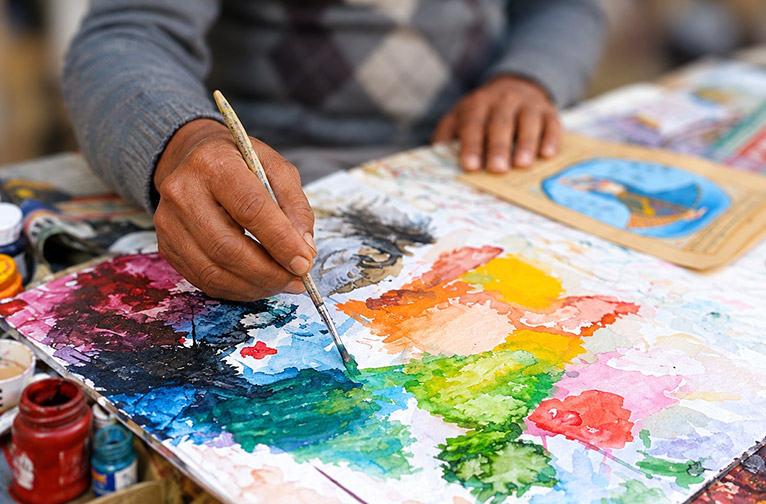
In Bundi, the sun in March is already showing its teeth, and it's not summer yet. But here in the shadows of the little bazaar, in the cool of the cubby hole-like shop, you are quietly watching the artist add the finishing touches to a commissioned painting of the monsoon. Swirling black clouds, ranged overhead, look down on the merry gathering in a garden below. It is Teej, and the women in their festive finery are taking turns on a flower-bedecked swing, laughing and singing as they welcome the rainy season. Propped up on the stack of paintings along the wall, is another version of the arrival of the rainy season, rendered effortlessly by the same mastery. You quickly take out a sheaf of notes from your bag and hand it over to his boss, before another buyer takes off with it.
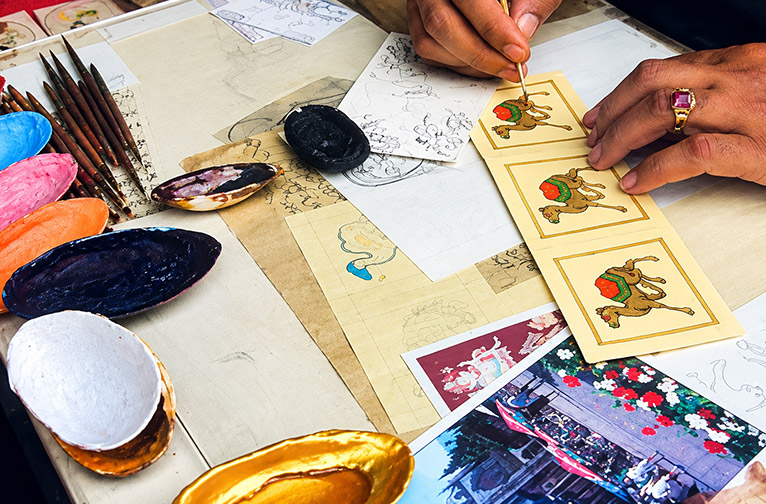
Bundi has long been the artisanal hub of Rajasthan’s exquisite miniature painting traditions. Littered in the back room of the shop are other half-finished miniature paintings, covering a variety of subjects inspired by Rajasthan’s rural expanses…but there are also pictures of old royals, the nobility and even vignettes of its tribal communities—described in detail by the miniaturist fine brush. Bundi itself is beautifully brought to life by the artist’s eye… a seller of marigolds in the flower market, oxen coming home at dusk… the swirl of the orange skirts of a woman as she swings down to lift her pot of water from the baori… The Bundi miniature painting school is no less a rival for buyers than those from the Kota miniature school, once a part of it.
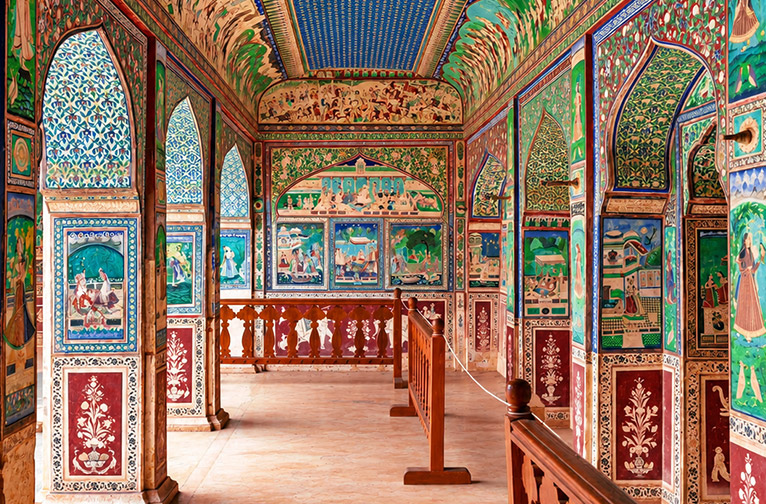
When shopping for miniature paintings, you’ll become familiar with the theme of Ragmala, the visual moods inspired by music; the most obvious form of this is expressed by the stages of love exemplified by the immortal love story of Radha and Krishna. Bundi, famed for its Ragmala, Rashikapriya and Baramasa (12 seasons) paintings is believed to be the contributor of the earliest known Ragmala painting executed for a ruler. Another popular commission was the Rasikapriya painting. Though the Bundi school scripts very strong Mughal influences it is deeply rooted in its original orientation which veers towards a palette of vibrant hues of red and blue.
Mughal miniatures introduced fresh influences under Jehangir and his engagement with European art. In the 18th century Kota overrode Bundi’s stature in miniature painting, showing a dominance of hunting scenes and predators like lions and tigers of the Indian jungle.
Rendered on both silk and paper, Rajasthan’s miniature art is a precious legacy fiercely protected by the descendants of the masters in the tradition which harks back to the medieval period; it was vigorously advanced by the patronage of the royals even then. No subject was spared from the miniaturist’s brush…from hunts to battles to regal ceremonies, mythological anecdotes and legendary romantic stories, they were captured with unerring beauty and matchless detail in miniature on the artist’s canvas.
However not many of these pre-Mughal samplers have survived over time, except what one may find serving as illustrations in traditional texts; but these miniatures did serve as a base for its revival with the growing influence of the Mughals, who in the 16th century started importing Persian artists to the court's royal ateliers. Yet the miniaturists flavoured the art works with local and generational influences, crafting a very distinctive style, based on the local environment, that retained Rajasthan’s cultural identity.
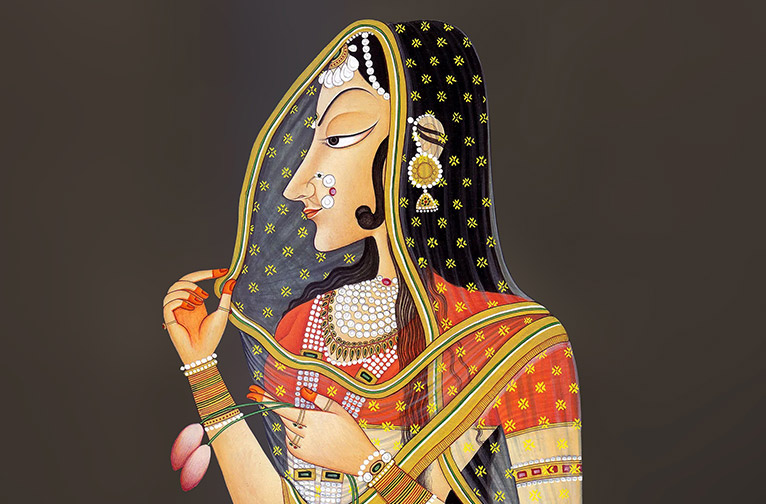
The Kishangarh paintings are known for their lyrical quality. An unmissable product of this school is the elegant painting of Bani Thani, the mistress of Raja Savant Singh in the early 18th century. She is also believed to have inspired the Radha of his painter Nihal Chand who was famed for his paintings of Krishna with his lady love.
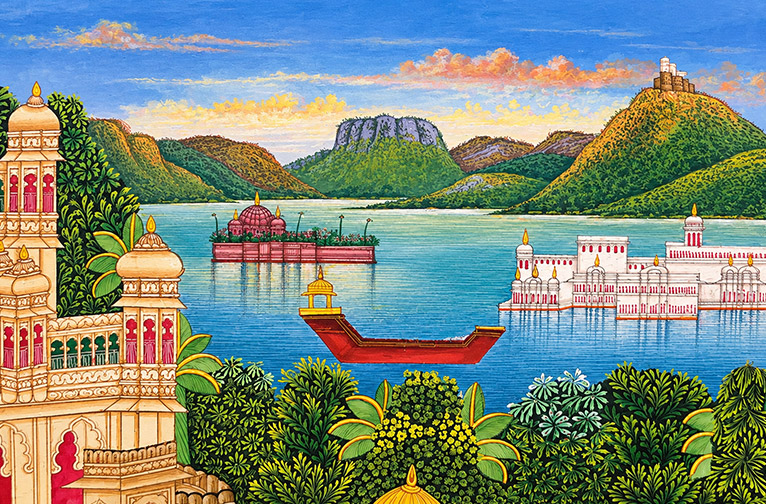
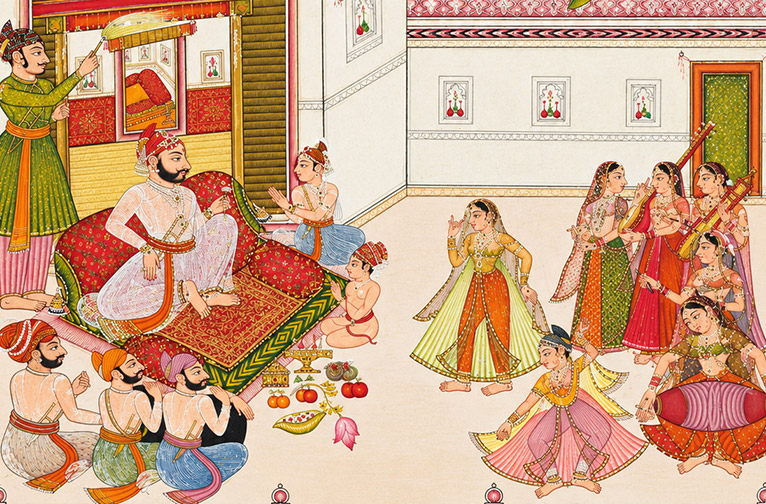
Mewar (Udaipur) School, inspired by the Krishna Bhakti cult, had one of the biggest ryal ateliers. Its miniatures favoured themes such as the Ragmala, Krishna Leela and Nayika Bheda, a guiding principle for courtly artwork. Themes were also rendered from the Ramyana. Over time it evinced greater realism, with scenes from court life, boating trips on lake Pichola etc. Green dominated the colour palette. The Udaipur collection of works also includes a Ragmala set of paintings by painter Nasruddin, from 1605.
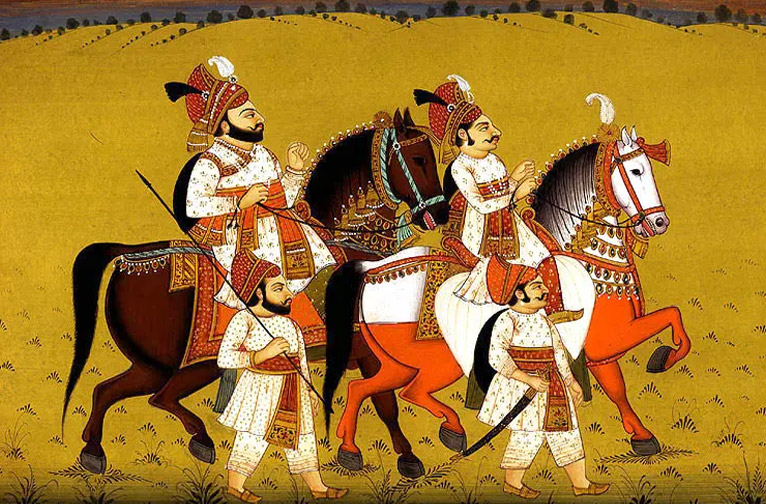
From the Marwar (Jodhpur) School 19th century, the miniaturist focused considerably on horsemen, hunting and social get-togethers. Jaipur, of course, showed strong Mughal influences, with a focus on symmetry and vibrant hues; but in the latter half of the 19th century evinced a delight in European colours. Common themes ranged from royal life, courtly events, and mythology. The Rajasthani miniature painting also birthed the Pahari hill schools of miniature painting in the Himalayan states helmed by Rajput rulers, such as Kangra.
Picking up a Rajasthani miniature painting as a unique memento of your travels through this legendary land is like taking home a slice of Rajasthan’s visual storytelling and artisanal traditions in miniature. These reflect in minute detail, not just its regal events, but also its deep-seated cultural practices, and different aspects of its religious pursuits. We strongly advise if you are looking for an authentic piece, instead of picking up a printed replica in the market, opt to visit an artist’s studio, where the craft is being kept alive. Colours are prepared from minerals and plants and because it requires skill and adherence to traditional techniques for detailing and using the colour palette for the subject at hand, it can never be a hurried process. The emotional tug of watching the artist laboriously at work is inexpressible.
You can buy paintings directly from studios or artists themselves. Alternatively, pick one up at an art gallery or government emporium. For greater authentication check out the detailing, brushwork, and rendering of the colour palette. The human touch will be impossible to miss, compared to a faultless printed replica.
If you are specifically on an art focused trip you can even enrol for a short-term course which introduces you to the craft with some basic practical exercises, at one of the studios in Jaipur or Udaipur. It’s a great heads-up to inspire a deeper dive into the world of the miniaturist.