Long before the advent of the colonial period India had a well-documented history of global maritime trade. Hard backed maritime trade links were set in place to connect the sub-continent with the Roman Empire and other regions of Europe in the period that followed the Empire’s decline. Blessed with a coastline covering thousands of kilometres, it was little surprise that being equipped with the biggest peninsula in the world India had a string of hectically busy port towns at the time.
Trade and cultural exchange have been a critical imperative for India’s progress and connectivity with the world beyond its shores. Its importance as one world’s most progressive nation is richly reflected in its exports of commodities and culture, via the vast network of sea lanes that connected it not only with Southeast Asia and Africa, but also the West between 2nd century BCE and the 15th century.
And don’t let the British colonists distract you by a 200-year legacy of pushing India as a ‘third world country’!
What’s interesting to note is that beyond commodities, all through these ancient times, there was another significant exchange being conducted in the ports of call strung along the Maritime Silk Trade Route— these were ideas, culture, faith, language and artisanal skills. On board these ships you would discover a wild mix of seamen, traders, monks and priests, envoys and adventurers off to explore new worlds.
India’s Maritime Silk Trade Route has been less trumpeted than its northern connection with the Silk Route from China. Also, not many travellers are aware that India’s southern shores have enjoyed very vital ties from ancient times through the firm linkages with the Maritime Spice Route connecting Southeast Asia, China, the Middle East, and Europe.
Numerous sources going back to the 1st millennium BCE attest to trade between Western Asian and the west coast of the Indian Subcontinent; the Babylonians are said to have used teak and cedar woods imported from the Indian Subcontinent as early as the 7th and 6th centuries BCE.
Plenty has been documented about the West’s fascination, even obsession, with India’s exotica, be it the ‘black gold’ (pepper), gemstones, sandalwood, ivory, gossamer-fine muslins, silk, linen, cotton, dyes like indigo, gerua, tannin etc. It’s not unknown for those sailing ships to cross the oceans, taking away even exotic birds like peacocks and parrots and animals like tigers, lions, camels, monkeys, etc.
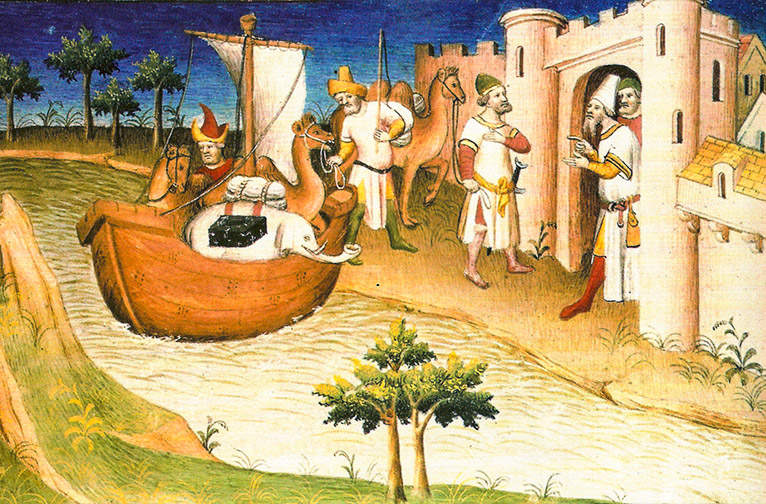
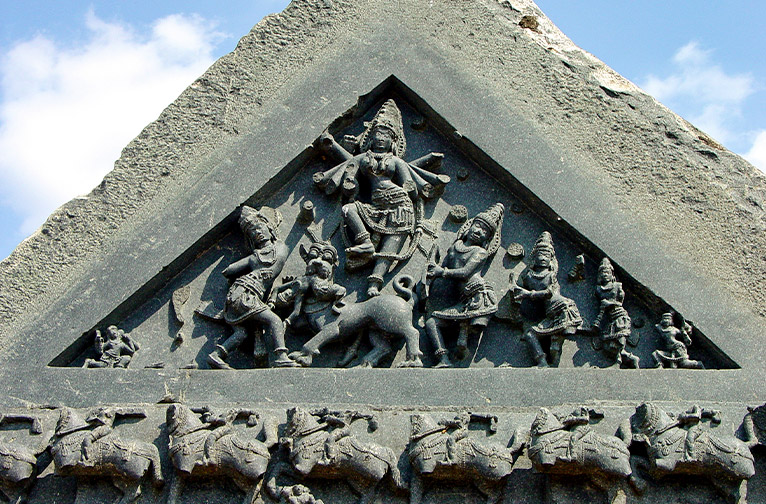
In the 13th century the famous Italian traveller and adventurer Marco Polo on his return from China to Venice arrived at the Coromandel Coast during the reign of the Pandyas in Tamil Nadu. Marco stopped by to also pay his respects at the grave of St. Thomas the Apostle near Chennai. He also visited Motupalli Port and capital city Warangal during the reign of the Kakatiya queen Rudramma Devi whose rule extended over parts of what are now Andhra Pradesh and Telangana. If you recall, the Kohinoor Diamond was mined at the Golkunda mines in the region, around the 13th century. In his travelogue, The Travels of Marco Polo, Marco has left us his observations about the thriving trade, particularly in spices, gems, and cotton textiles. In the 15th century Abbdur Razak, a Persian scholar and ambassador came visiting during the rule of Deva Raya II of Vijayanagar, whose bastion was Hampi.
Ancient Rome’s love affair with India took a long time to fade. How its ladies loved those Indian pearls and luxurious textiles! Pliny the Elder, the Roman writer, writing in the 1st century CE, cuttingly speaks of the massive drain of gold from Rome into India to pay for her exotic exports. As he saw it, the drain of gold was lost for unproductive luxuries. “So dearly do we pay for our women and our luxuries,” he lamented. The Romans ignored him and continued to pour gold and silver into India in exchange not only for spices, but also muslin, silk and other expensive luxuries.
What has come to light has been the massive volume and value of ancient Indo-Roman maritime trade routed through the Red Sea. As observed by historian William Dalrymple “It was India, not China, that was the greatest trading partner of the Roman Empire.”
The archaeological site of the ancient port of Arikamedu is a 5km run from Pondicherry (or Poduke, the trading port cited in the Periplus of the Erythrean Sea) on the Coromandel Coast. The Periplus, an anonymous Greco-Roman text of the 1st century CE, describes the then known coastal landmarks and ports of the Indian Subcontinent’s coastal belt.
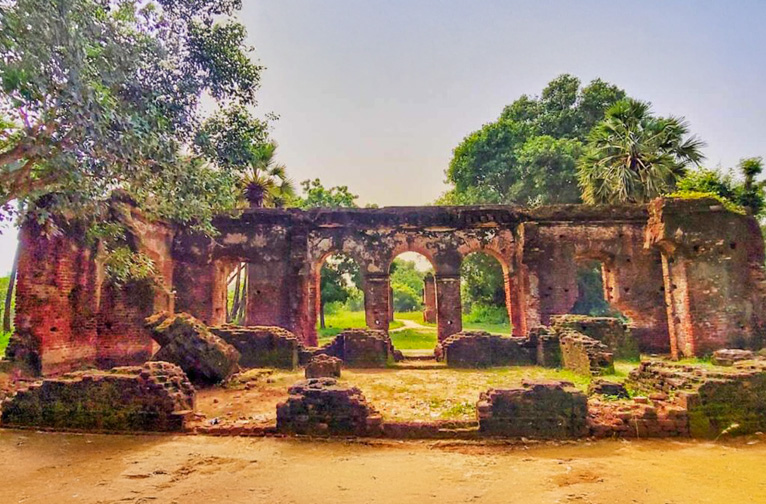
Also, once part of the Asian maritime network, Arikamedu has yielded a cache of Roman coins along with other antiquities, such as an oval engraving on a bead of the bust of the Roman emperor Augustus, amphorae shards, glass beads, terracotta figurines, etc. The port was a significant hub for Indo-Roman trade from the 300 BCE until medieval times. It has been observed that artisans from Rome quite possibly may have lived and worked at workshops in Arikamedu; what underpins this theory is the discovery of the gem intaglios marked by designs often used by Greco-Roman gem cutters. Few travellers are even aware that Arikamedu was a major hub for manufacturing muslin, jewellery, glass, and its famous gold beads.
According to a Chinese writer penning his observations in the 1st century CE, Kanchipuram, known for its indigenous silk (pattu) production, was also a significant producer of rare gemstones and large glittering pearls, which it would exchange for gold and Chinese silk, part of China’s transit goods to Rome via the Tamil (Tamilkam) ports.
From its Malabar Coast, India was sending out expensive timbers, ginger, pepper, cinnamon, cardamom and food grains. Ancient Kalinga (Odisha) on the eastern coast bordering the Bay of Bengal, used to supply spices, diamonds and precious stones to the Romans; to China it sent off ivory paper and luxurious textiles.
Bengal conducted extensive trade with China, Ceylon (Sri Lanka), Java and Sumatra through its Tamralipti port. Dating to the 1st century BC, Muziris, the ancient port city in Kerala, was one of the most important trading ports in the world. It played a significant role in connecting the region with the Persians, the Phoenicians, the Assyrians, the Greeks, the Egyptians and the Roman Empire. Key export items included spices, especially black pepper, semi-precious stones, diamonds, ivory and pearls, etc. Goods, including textiles, wine, wheat and gold coins etc passed through the port from 30 countries.
The discovery of the remains of the Muzris, which vanished without trace because of a natural calamity have garnered considerable interest. Most of the port’s activities were eventually shifted to Kochi. Other hubs for seaborne trade were Mahabalipuram, Madurai, Cranganore, Nagapattanam, Calicut, and Mangalore etc.
India’s Maritime Silk Route offers an adventure into one of its most colourful cultural and commercial landscapes. Dig deeper and find out many new gems not covered here.