Naughty Prada! Stealing our Kolhapuri chappals and showcasing them on catwalks as their own make…
In the 70s the Kolhapuri chappal was very much part of the college girl’s footwear wardrobe. Teamed typically with churidar pyjama and a cotton khadi kurta, available in vibrant hues from Khadi Udyog, next door to the popular Standard Restaurant and Regal Cinema at Connaught Place, it was the ideal dress code on campus for Delhi’s punishing summers.
The bustling hub of Janpath was your go-to place for Kolhapuris; inexpensive, trendy and comfortable, they jostled for space amongst the fancier platforms, clogs, sandals, block heels, and boots. You could pick up a pair at Janpath for about 20 to 30 bucks then!
When Italian luxury house Prada’s Spring/Summer 2026 menswear showcase in Milan cat walked slippers that were remarkably familiar to India’s tan coloured ringed-toe grip Kolhapuris, there was an uproar amidst the country’s fashion fraternity— causing ripples and news headlines across the nation. The gall of the house of Prada to claim the humble leather footwear’s provenance as their own! The nasty aftermath was that there was no acknowledgment of its Indian legacy. It hit a nerve, barrelling across the corridors of power, no less, to take action.
Kolhapuri’s, for centuries, have been an integral part of India’s heritage and tradition in the footwear industry. The charmkar community of Maharashtra has been creating these handstitched, veg dye-tanned, flat leather slippers, embellished with braiding, as far back as the 13th century from Kolhapur. The Kolhapuri was accorded the Geographical Indication (GI) tag in 2019 as a protective measure of its provenance.
The Kolhapuri has spread its footprint, literally, across the country, being favoured for its handcrafting, comfort, durability and affordability. Kolhapuri chappals are available for both men and women. You can pick up the non-fuss traditional, tan coloured, handcrafted ones, or go for the many derivatives that are now also available in response to contemporary demand.
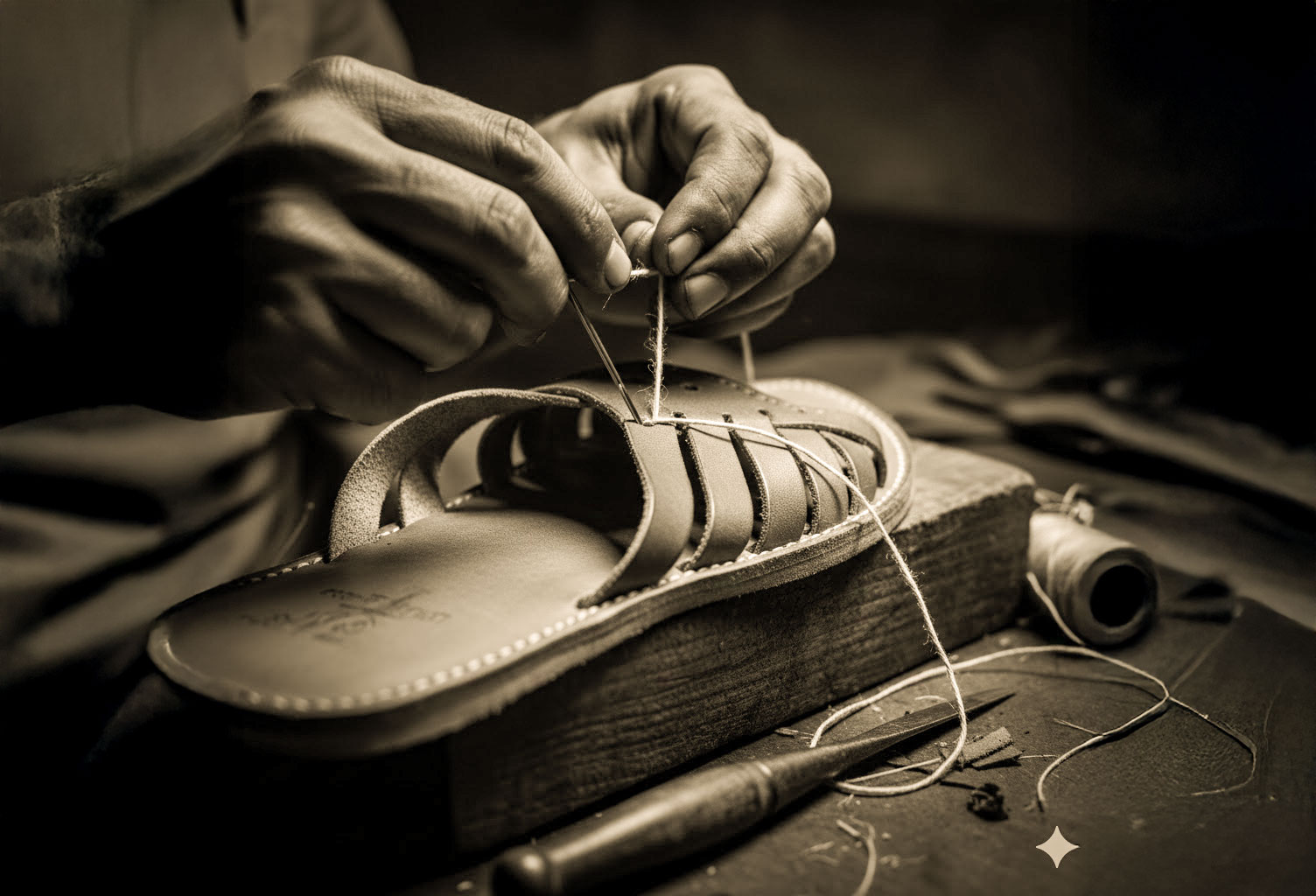
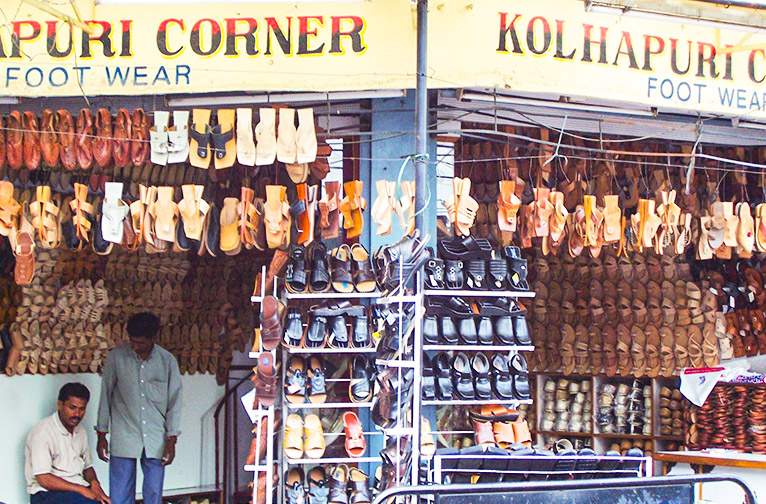
Channelized even through the big-ticket mass production retail brands like Bata, the Kolhapuri chappal has created a special niche for itself. Indian designers were quick on the uptake to upgrade its look with fancier offerings while retaining its core fundamentals. Some tweakings— think bigger heels, cushioning, embroidery, mirror work, geometric patterns, floral motifs, etc., gave it a new twist for a contemporary market. Joy Shoes in Mumbai’s Colaba offers Kolhapuri chappals encrusted with Swarovski crystals! The likes of Brad Pitt, Amitabh Bachchan and Shah Rukh Khan have been Joy’s coveted customers alongside a mix of less luminary walk-in tourists.
Supporting the authentic craftsmanship of Kolhapur’s generational old cobbling skills is a wondrous way to give back to a community which has been quietly protecting this artisan legacy which could well have been lost, like many others in India.
You can easily pick up a basic Kolhapuri for anything between Rs 500 to Rs 800. Authentic pieces can cost Rs1000 upward…but certainly not Prada prices!!!!